|
|
0 5 . 0 6 . 2 6
All Access
8 items
There was no newsletter yesterday, May 5.
|
|
|

|
State
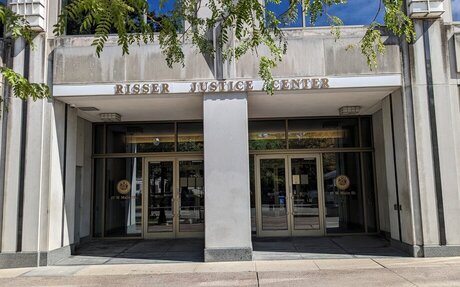
A federal judge refused to let Virginia’s court administration escape a lawsuit by Courthouse News and Lee Enterprises that says Virginia officials are imposing a prior restraint on speech. “I thereby find that the plaintiffs have made a plausible showing that the Dissemination Restriction is a prior restraint that would not survive strict scrutiny,” wrote Judge James P. Jones in a 16-page order [denying the government’s motion to dismiss the case.] … The current case is over a rule that prohibits lawyers — who have online access — from sending public court records to journalists. … In his ruling, Judge James concluded the press had plausibly alleged the prohibition on lawyers, referred to as the Dissemination Restriction, constitutes a prior restraint on speech.
|
|
|
|
Local
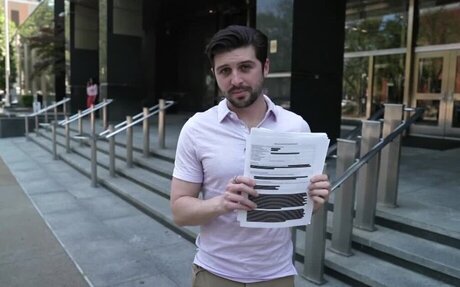
Richmond Public Schools (RPS) is not revealing much about an internal investigation into allegations of mismanagement inside the department responsible for maintaining school buildings. In response to a request for public records, RPS blacked out a majority of the requested information. Last month, CBS 6 learned RPS’ facilities director Bobby Hathaway parted ways with the district. RPS did not explain why or confirm the nature of his departure, but sources told CBS 6 it came amid an investigation into allegations against him. So, CBS 6 filed a Freedom of Information Act (FOIA) request for records related to the probe. The school district then provided heavily redacted documents which withheld key findings, complaint allegations, and even some recommendations from public view. However, RPS did release bits of details throughout the investigation report which revealed operational failures. … The rest of the information contained in the report, RPS chose not to disclose under a discretionary FOIA exemption that protects “personnel information.” “The personnel exemption was never designed and never intended to cover up wrongdoing by public employees, particularly when that wrongdoing has to do with the misappropriation of public funds or taxpayer dollars,” said FOIA expert and transparency advocate Megan Rhyne, executive director of the Virginia Coalition for Open Government.
|
|
|

|
Local
Richmond officials have republished several years of data showing City Hall’s financial transactions after The Richmonder filed a Freedom of Information Act request asking for the information. The city has not been following a transparency law the City Council passed in 2015 that requires the routine publication of a payment register showing how public funds are spent. Officials complied with the payment register law for about four years, but stopped publishing new data in 2019. They also took down the old data in 2024 out of fear it might contain confidential or private information that wasn’t caught in the initial review process. Mayor Danny Avula’s administration is still pointing to those concerns, saying they prevent the government from complying with a law meant to help assure Richmond taxpayers that public funds are being spent wisely. Because the data can contain sensitive or confidential information, city officials have said it takes an enormous amount of manual staff time to review it and make redactions. … While much of the data might not be particularly interesting to city residents who aren’t looking for something specific, the payment register enables the public and the press to research city spending patterns without having to file FOIA requests, which can also eat up city staff time and resources.
|
|
|

|
Local
Town Councilman Chris Page has filed a formal complaint against the Town and Downtown Blackstone, Inc., asking Commonwealth’s Attorney Leanne Watrous to conduct a “criminal investigation into the Town of Blackstone’s ongoing financial relationship with DBI.” Page also has contacted the Internal Revenue Service, requesting an investigation and audit of DBI, which is registered as a Virginia 501c3 non-profit. Page accuses the Town-funded organization of a “documented pattern of inaccurate financial reporting and intentional omission of significant government support…” The blow-up is the result of Council’s March 30th decision to dissolve the Mayor’s Tourism committee and have those efforts led by DBI. Page, who voted against that decision, claims the move was made to avoid public meeting notification and open records required by the Virginia Freedom of Information Act (FOIA). But Page in his complaint insists that DBI is a public organization — not exempt from FOIA — because the Town provides most of DBI’s funding, and its Executive Director’s salary and benefits are paid by the Town.
|
|
|
|
Local
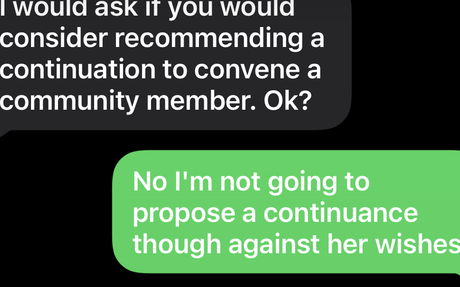
… During a Jan. 12 Richmond City Council meeting, the body was poised to take a final vote on Nadia Anderson’s permit application and put it to rest eight months after the debate had started. Facing long odds in light of the zoning code and the Planning Commission’s rejection, Anderson said she wanted the councilmembers to end the matter one way or the other — and specifically asked them not to kick the can down the road yet again, thereby extending what she said was an emotionally draining process. But Council Member Andrew Breton approved a motion to continue the ordinance to a later date anyway. Text messages obtained by The Times-Dispatch show City Council President Cynthia Newbille and 6th District Councilwoman Ellen Robertson both pushed Breton to do so, sending messages in which they urged him to act against Anderson’s expressed wishes as the meeting was taking place.
|
|
|
|
In other states-Wisconsin
In a decision released Tuesday, a Dane County (Wisconsin) court sided with The Badger Project and its co-plaintiff, the Invisible Institute, a Chicago-based journalism organization, in their lawsuit demanding that the state Department of Justice release the names and work history of every certified law enforcement officer in the state. … The journalism organizations filed the lawsuit in 2023 when the state DOJ partially denied their request for the policing data. The department cited safety and privacy concerns, especially for undercover officers. The data requested would include an officer’s name, birthday or birth year, zip code, and his or her work history. Home addresses were not requested. In response to the denial, The Badger Project and Invisible Institute sued in 2024. The plaintiffs argued that since undercover officers don’t use their true names, releasing them wouldn’t put them in jeopardy. The state DOJ’s 2023 denial was “unlawful,” the court wrote in the opinion released Tuesday.
|
|
|

|
In other states-Michigan
A Michigan Court of Claims judge ruled that state policing regulators can keep secret the names and employment histories of current and former officers throughout the state, but Metro Times and Invisible Institute plan to appeal the decision. Judge Christopher P. Yates decided Friday that Michigan State Police can withhold the records under exemptions in the state’s Freedom of Information Act (FOIA), dealing a setback to a national effort to track so-called wandering officers who move from department to department after engaging in misconduct. … For active officers, Yates concluded that the public interest in nondisclosure was strong because releasing the records would identify “every single active law-enforcement officer” in Michigan. Although the judge acknowledged that “no free society wishes to be subjected to secret police,” he wrote that officers should be identifiable while on duty but not necessarily in their private lives. He did not make clear how this principle would function in this or future requests, given that this request only sought professional information about the officers.
|
|
|
|
Opinion
In 2021, the South Carolina NAACP tried to solve a time-sensitive problem: identifying tenants facing eviction before it was too late to help them. The filings were public record, posted on the state’s own court website. But with thousands of cases filed each year — far beyond what a small team could realistically review in real time — the organization built a simple program to collect them automatically. The state blocked it. The NAACP sued, arguing that restricting access to public records violated its rights. A federal judge indicated the policy likely raised First Amendment concerns, and the case, NAACP v. Kohn, was settled in 2023, with the state restoring access. The NAACP prevailed. But the more important point is this: Accessing public records required two years of federal litigation. That should not be the price of transparency. Across the country, governments promote online “transparency portals” as proof of openness. Visit the website of any larger local government and you will find links to governing board meeting agendas, financial reports and campaign finance disclosures. In theory, this information is public. In practice, much of it is inaccessible at any meaningful scale. Data can be viewed one page at a time but not downloaded in bulk. Automated collection — often the only way to analyze large data sets — is routinely blocked by security systems that treat all scripted access as suspicious.
|
|
|
|
|
|
|
|
|