|
|
0 5 . 1 4 . 2 6
All Access
5 items
|
|
|
|
Local
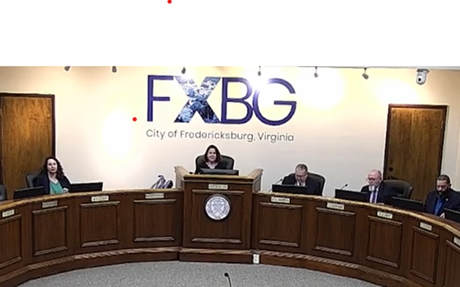
A contingent of data center supporters appeared before Fredericksburg’s City Council on Tuesday to urge the council to place a project on its agenda that it has yet to do so. At issue was a proposed data center complex on 84 acres at 1500 Gateway Boulevard, known as the Hylton Tract. The requested rezoning and special-use permit that would allow the development have already been unanimously rejected twice by the city’s planning commission, most recently in December. But that didn’t stop representatives of various trade and building associations from packing council chambers on Tuesday to express support for the project. Several council members privately expressed surprise at the turnout since they don’t even have a proposal before them at this point. … The comments were made during the public comment period that the council sets aside at every regular meeting. Most of the speakers live outside the city, including one from Pennsylvania.
|
|
|

|
Local
The Mineral Town Council discussed two items that spurred controversial debates at its May 11 meeting — a discussion on findings from a state contractor investigation initially submitted last year by council member David Hempstead against the former town manager and a petition headed to the Louisa County Circuit Court to remove Hempstead from office.
|
|
|
|
Local
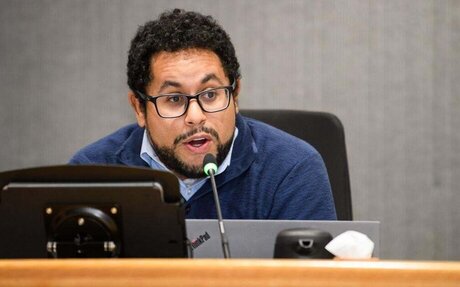
As a Prince William County supervisor, Kenny Boddye often hears from developers that want to flip land for data centers. Now, he’s in their shoes. While working his day job as director of government affairs for Ryan Stuart Development, Boddye recently introduced a potential data center project in Summit Point, West Virginia, to local government officials. … According to Mark Flynn, a legal advisor to the Virginia Municipal League, Boddye’s employment with a development firm working on data center projects does not inherently present a conflict of interest under Virginia law. The Virginia State and Local Government Conflict of Interests Act prohibits public officials from using their positions for personal financial gain, accepting improper gifts or having conflicts of interest in contracts and transactions. Unless there’s a direct tie between Boddye’s firm and a development project before the Prince William Board of County Supervisors, there is no conflict, Flynn said. “Yes, he does data center work, but it’s only when the data center work is in Prince William County – something the Prince William Board (of County Supervisors) would be involved in – that it becomes an issue,” Flynn said. “The law says there has to be a personal interest in a transaction a board is looking at. There is no such transaction.”
|
|
|

|
Local
The focus of debate then turned to the APA option. According to Russell County administrator Lonzo Lester, the Auditor of Public Accounts can only proceed with the matter and turn the investigation over to the Virginia State Police if specific allegations of illegal activity are in place. If no allegations are found, then the matter can be put to rest. “I have no allegations in the 11 years I’ve been here,” Lester said. He said this was the best route to take, because a forensic audit with a private company would leave room for doubt and public speculation. He said if UHY found wrongdoing, some in the public would gloat on Facebook. If UHY found nothing, those same individuals would take to Facebook, accusing Lester and Starnes of a cover-up. “You’re damned if you do and damned if you don’t,” Lester said. “Why are we concerned about Facebook?” Supervisor Nate Kiser asked. “That’s ridiculous.”
|
|
|
|
Opinion
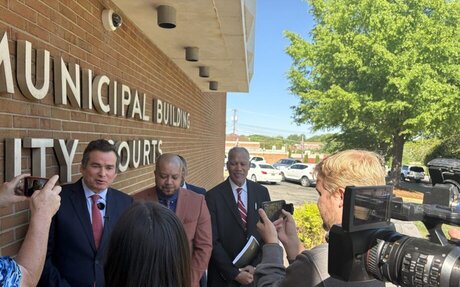
Like that Princess Anne County jury did in ’52, the jury in Loudoun County recently decided not to remove Ben Nett from office — even though he’s been indicted on six felony charges, including allegations of bid-rigging. Another removal case is now sitting in the court system — the one against Martinsville Mayor L.C. Jones, which is awaiting review by a special prosecutor (the third prosecutor to handle this tangled case). I’ve written two previous columns on this. … I offer no special insight into either case; my questions are simply about the law — which has been used so little that not until now, with two cases unfolding at the same time, do we get to see how unevenly it can be applied. With that in mind, here are some questions that legislators might want to consider if they revisit this section of the code.
|
|
|
|
|
|
|
|
|