|
|
0 7 . 1 5 . 2 6
All Access
7 items
There was no newsletter yesterday or Monday.
|
|
|
|
State
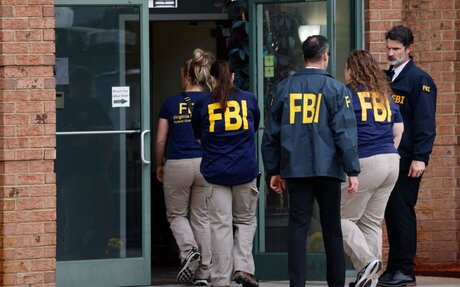
A U.S. District Court judge authorized the FBI to monitor state Sen. Louise Lucas’ phone communications between March 6 and April 5 of this year, according to sealed federal court records. Those communications included correspondence with journalists, according to a letter received Monday by a Virginian-Pilot reporter. The letter outlines the timeframe of the wiretap and flags Lucas’ cellphone number as the target phone. “During the period of authorized interception, wire communications to or from your telephone were intercepted,” the July 7 letter states. The recordings were later sealed, according to the letter. … The secret wiretapping suggests the Department of Justice was surveilling Lucas at least a month before the FBI raided her office and the Cannabis Outlet in Portsmouth back in May.
|
|
|
|
Local
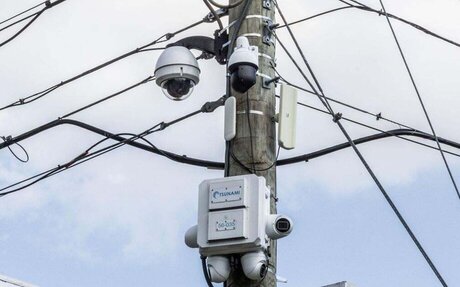
According to police and to records obtained by The Times-Dispatch, detectives in the Capital City Intelligence Center viewed the RRHA’s Tsunami camera feeds at least 827 times during the 11-month period between Aug. 1 and June 30. And on at least 17 occasions, investigators asked public housing officials to identify the tenants they were watching. Among the most common reasons, according to the records, were investigations into narcotics dealing, hit-and-run crashes, robberies and violent crimes like murders, rapes and assaults. … The approval process, outlined in a memorandum, requires that requests to “view, download and reproduce video data” be submitted in writing to the RRHA’s chief executive officer or director of public safety before officers use their assigned login credentials to access the network. One of those two RRHA officials must then approve the request in writing. But there are exceptions to that rule. For example, in “exigent circumstances,” RRHA’s CEO and public safety director are permitted to “grant verbal approval” for police access to the cameras. The mandatory written request can then be submitted and authorized after the fact. … According to records obtained by The Times-Dispatch, that exception appears to be the common practice.
|
|
|
|
Local
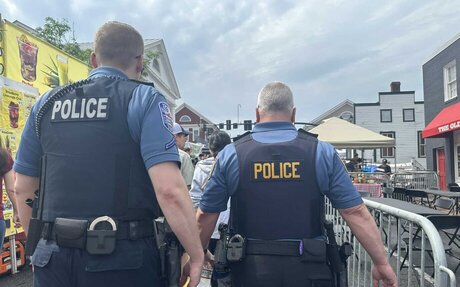
Residents, reporters and other interested members of the public now have one less option for keeping track of police activity in Fairfax County and Fairfax City. The City of Fairfax Police Department announced Friday (July 10) that it is encrypting its primary police dispatch radio channel, so the feed will no longer available through public scanners or online radio streaming services, such as Open MHz. … “Additionally, encryption helps protect the safety of community members and officers by reducing the potential for real-time monitoring and redistribution of sensitive police communications through scanner applications and online streaming services to individuals seeking to misuse the information,” the department continued. … However, for local news outlets like FFXnow as well as amateur public safety watchers and the general public, the scanner, particularly the dispatch channels, can be a useful source of information about developing incidents and events that aren’t officially reported by the police. For instance, the Virginia State Police didn’t publicly report a June 2025 road rage-related shooting on I-395 in the Springfield area that sent one driver to the hospital until a month after it occurred.
|
|
|
|
Local
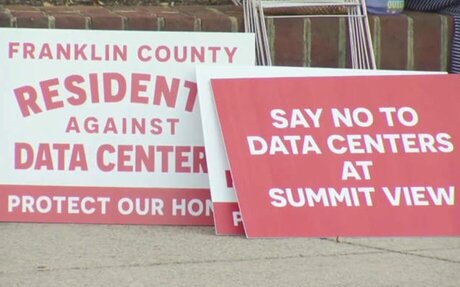
Franklin County residents are demanding more transparency from local leaders over a potential data center project known as “Project Flash,” though county officials say no formal plans have been presented or approved. Concerns about possible data center development were raised during Tuesday night’s Franklin County Planning Commission meeting, where residents questioned what they say is a lack of information about future projects. “As the people, we should have the right to know when they’re going to make these decisions,” said Danae Crosby, a Franklin County resident. … When asked what Project Flash is, Franklin County Supervisor Tim Tatum said he could not disclose information. Tatum confirmed the county has been contacted by data center companies but said no agreements have been reached and no votes have been taken regarding a data center development.
|
|
|

|
Higher ed
The University publicly released its third quarterly compliance report to the U.S. Department of Justice Wednesday. The report, dated June 30, outlines changes in faculty and staff hiring practices to remove diversity requirements and the elimination of programs and roles related to diversity, equity and inclusion across the School of Continuing and Professional Studies, the School of Education and Human Development, the School of Engineering and Applied Science, the Division for Student Affairs and the McIntire School of Commerce.
|
|
|
|
Other states-South Carolina
Clemson’s quick pivot to a new university president three days after its original choice bowed out has renewed questions about secretive search processes and adherence with state law regarding such hires. Benjamin Ayers, the University of Georgia provost whom trustees selected as president July 9, was not among the three candidates disclosed as finalists in May after Clemson initially selected Michigan State University President Kevin Guskiewicz — a national figure in higher education who had previously led two top research universities. The S.C. Freedom of Information Act does not preclude secrecy in the process, though it does require a measure of transparency in the end: Public bodies, such as boards of taxpayer-funded universities, must release information and materials about no fewer than three final applicants considered for a public position.
|
|
|
|
|
|
In case you missed it, anything you purchase is no longer worth every penny. And if you have two cents to share you’re going to have to round it up to a nickel. Last February, President Donald Trump directed Treasury Secretary Scott Bessent to discontinue production of the penny, asserting in a Truth Social post that it “literally cost us more than 2 cents” to produce and was “wasteful.” The announcement immediately raised questions about whether the president possesses the unilateral authority to remove the coin from circulation. It also prompted some debate over the potential impact on commerce. I imagined that Trump’s order generated a substantial paper trail inside the United States Mint. I sent the agency a FOIA request. A year later, I received some records and data in response.
Federal
“Democracies die behind closed doors.” ~ U.S. Circuit Court Judge Damon Keith, 2002
Follow us on: X / Facebook / Instagram / Threads / Bluesky
|
|
|
|