|
|
0 7 . 1 7 . 2 6
All Access
5 items
|
|
|
|
Local
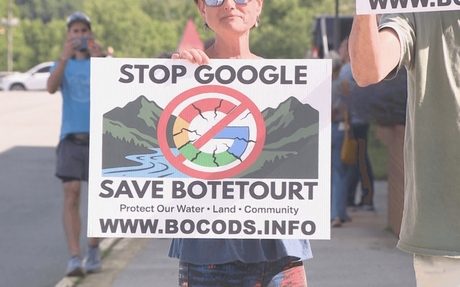
As Virginia’s drought continues, a proposed data center in Botetourt County is fueling new questions about who gets access to the region’s water, and whether residents were given the full picture. Community members say information they received through a Freedom of Information Act request doesn’t line up with what they were told during public meetings about the project. Kathryn Hatam, a member of the Southwest Virginia Data Center Transparency Alliance, said residents repeatedly asked county leaders and project officials about the facility’s expected water use but felt their questions went unanswered. So the group filed a FOIA request. Among the documents released were emails between Google and the Western Virginia Water Authority discussing water demands of 10 million to 11 million gallons per day. Those figures were significantly higher than the 2 million gallons per day residents had been told was the project’s maximum expected use.
|
|
|

|
Local
Mayor Danny Avula has proposed a series of tweaks to his proposal to resume publication of a narrower financial database showing how City Hall is spending taxpayer dollars. The changes increase the overall level of transparency under the mayor’s proposal for the city’s payment register, adding back in several fields such as payment dates, account descriptions and account codes. Under the mayor’s original proposal, those data points would have been excluded from the online data. The proposed amendments would also break down payment amounts into greater line-by-line detail rather than listing aggregated amounts of money spent with each company doing business with the city. … The changes — which the Avula administration said were informed by their recent push to review and publish payment data for fiscal year 2025 — were previewed for the City Council this week. However, they have not been officially incorporated into the plan, which requires Council action. That means the revisions are likely to delay the proposal until at least September after several City Council hearings that have yet to produce a substantive vote.
|
|
|

|
Local
Paulette Dean, longtime director of the Danville Area Humane Society, is accused of falsifying records in her role as the city’s humane investigator, according to a motion filed Wednesday in Danville Circuit Court. The court document seeks to remove Dean from this position. Dean said Thursday afternoon that she resigned from the position after the motion was filed, but she will remain director of the animal shelter. … The motion filed by Commonwealth’s Attorney Michael Newman alleges that Dean falsified records about investigations and seizures. Dean was required to record all investigations she performed and maintain those records for five years, submitting a quarterly report to the Danville Police Department. The motion said that Dean’s June 1 quarterly report included 22 pages and covered the period from October 2021 to June 2026. All pages of the report were identical, except for a different quarter and year listed on each page, according to the motion. Each report said that there had been no animal seizures during that period.
|
|
|

|
Column
When I was executive editor of the Richmond Times-Dispatch, I’d often overhear government reporter Samuel B. Parker, phone pressed to his ear, deep in conversation with an official about the intricacies of a records request or a blown deadline. Those snippets hinted at what Parker was pursuing and showcased his remarkable ability to turn public records into high-impact journalism. To say he has been prolific is an understatement. Since his promotion from copyeditor three years ago, Parker, now 28, has delivered a stream of investigative scoops. … I’m now senior director, local news for Times-Dispatch parent company Lee Enterprises, and I asked Parker about his strategies — and what other journalists can learn: First, harness FOIA as a routine tool. Parker has made FOIA requests part of his routine as a government reporter, approaching nearly every story by asking what internal documents, emails, text messages and other materials he might obtain.
|
|
|
|
Federal
A federal judge in San Francisco sided with U.S. Immigration and Customs Enforcement in a dispute brought by a UC Berkeley law professor seeking deportation data from the agency. Professor David Hausman initially submitted a Freedom of Information Act request to ICE, seeking 14 years of enforcement data on an expedited basis. After the agency denied the request, Hausman sued and filed a motion for a preliminary injunction, seeking to compel the court to order the agency to fulfill his request within eight days. U.S. District Judge Araceli Martinez-Olguin denied the motion, citing an apparent lack of imminent, irreparable harm that Hausman would face without injunctive relief. Courts considering preliminary injunctions in the FOIA context must focus their attention on the timing of the information and whether or not it may become stale, she wrote.
|
|
|
|
|
|
|
|
|