|
|
0 9 . 1 5 . 2 6
All Access
7 items
|
|
|

|
My take
So, you’d be forgiven if you thought that their opinion doesn’t sit right with me because I’m on one side of the data center divide or the other. But that’s not it. It doesn’t sit right with me because it leaves out a critical part of the puzzle that has little to do with the merits of any one merit or strike against data centers. What The Economist fails to understand — or omits — is how much of the backlash to data centers is grounded in citizen anger over the way the projects are presented to the public. Perhaps the better word is “sprung.” … Rural/Urban. Republican/Democrat. Young/Old. Blue collar/White collar. For national and international news outlets to attribute disquiet on faulty water usage data, unlikely job numbers or inflated tax revenue estimates lets the government decision-makers off the hook for excluding the public from what can quite literally be a life-changing decision.
|
|
|

|
Local
Russell County is exploring the possibility of bringing a data center campus to a 236-acre site on a reclaimed coal mine off Gravel Lick Road near the town of Cleveland. … The authority, which has not released anything publicly about this endeavor, declined to comment on the project. Laura Gilmer, who became the director of the authority this year, said it is under a nondisclosure agreement with Oasis. … “Honestly, it’s because there is nothing to report out yet. This is all very preliminary,” Ross Litkenhous, a co-founder of Oasis, said when asked why the project has not been publicly noticed. … Litkenhous confirmed that officials are under an NDA and added that municipalities might be worried about violating specific terms in the agreement. “It is limited in scope and not a blanket NDA,” he wrote in a response, adding that it ensures negotiations with clients and business strategies are not made public without their approval. Gilmer said it’s standard for many development authorities working with businesses to have NDAs in place, adding “there is nothing unusual about this project.” She denied a Freedom of Information Act request by Cardinal News for documents and communications related to the project, citing exemptions in Virginia’s public records code and referencing the NDA. While some of the exemptions might be plausible, an “NDA is not a defense to a [records] request,” said Megan Rhyne, executive director of the Virginia Coalition for Open Government.
|
|
|

|
Local
Last month, The Richmonder filed records requests with several localities asking for contracts with Flock Safety, the company whose automated surveillance cameras have caused blowback across the country. The three Freedom of Information Act requests had almost identical wording. Henrico County sent its contract the next day. Chesterfield County sent its contract the next week. The city of Richmond said it had no contract. … In at least three cases in the past nine months, the city said it had no records relevant to a FOIA request, then changed its answer after getting a slightly reworded version of the same request. That practice can erode trust in the FOIA process, according to a Virginia transparency expert, by leaving requesters wondering if a no-records response truly means there are no records. The city released the Flock contract after The Richmonder sent a third FOIA request that named the middleman company, not Flock. Officials offered behind-the-scenes assistance, but only after The Richmonder protested that the formal FOIA responses were clearly false. A police spokesman later acknowledged RPD had the ability to pull the Flock records all along, despite saying it had “thoroughly reviewed and researched” the request and found nothing to release. That was “boilerplate” denial language, officials said, that could have more clearly explained RPD had the Flock contract but preferred to have it released by procurement (which also denied having it).
|
|
|
|
Local
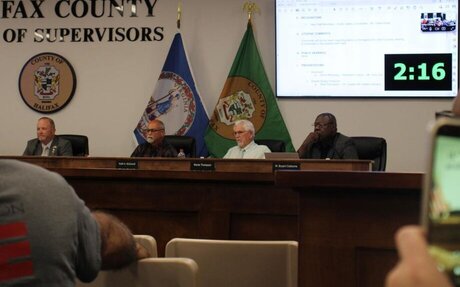
The Halifax County Board of Supervisors voted Tuesday night to use a metal detector for meetings after a discussion on the topic. Halifax County Administrator Ron Brade explained to the board that this had come up before, but no action was taken. Brade said this was about ensuring safety during board of supervisors meetings. There would also be no additional cost to the board, as they already had the detectors from when the meeting room was used as a courtroom; they would just need to be installed. … “You know these meetings sometimes get volatile in here. I don’t know how emotional some people might get, and so what’s it going to hurt to ask you to please walk through a gun detector before you come in this meeting. I think everybody will feel a little more comfortable,” Supervisor Dennis Witt added.
|
|
|
|
Local
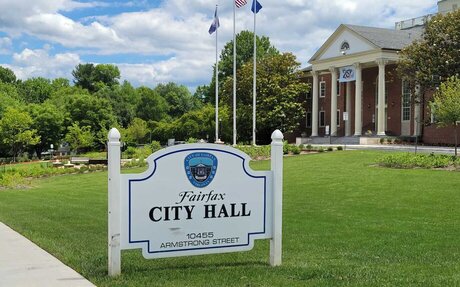
The Fairfax City Council voted last week to adopt a formal code of ethics that would allow members to impose sanctions such as a formal censure or loss of seniority for violations. The new 18-point code of ethics lays out standards for personal and professional behavior applicable to council members, the mayor, and appointed members of boards, committees, and commissions. Broadly speaking, it covers aspects of members’ relationships with one another, conduct in private and in public, and emphasizes their responsibility to act as stewards of the public interest, independent of personal gain. With little discussion, the motion to adopt the largely self-enforcing measure passed by a unanimous vote on Sept. 8.
|
|
|
|
Nationwide
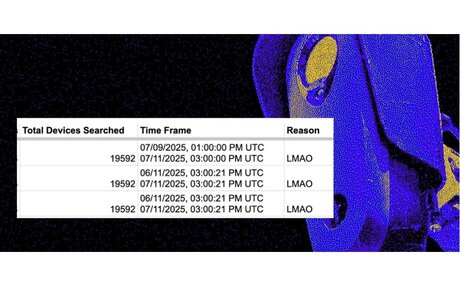
Last summer, a cop with the Lake County, Indiana Sheriff’s Department used Flock’s surveillance search engine to look for a license plate across more than 19,000 cameras in 1,558 cities and towns. The cop’s stated reason for the search, according to a record of Flock’s system, was “LMAO.” The cop is one of dozens who put gibberish, jokes, or other nonsense into Flock’s “reason” box, highlighting the casualness and lack of care some cops have when searching an incredibly powerful surveillance system. This is on top of the thousands upon thousands of cops who simply wrote something like “investigation,” “test,” or left the box blank as their search “reason,” according to a new analysis by the Electronic Frontier Foundation and shared with 404 Media. EFF’s investigation found cops across dozens of jurisdictions writing “LMAO,” “LOL,” “Hehe,” “Haha,” “idk,” “blah,” “TBD,” and “robbery I don’t remember the case number leave me alone” in Flock’s “reason” box for searches. They found cops writing “idiot,” “fuck this new search engine,” “dickhead,” “shithead,” and “WEIRD KID” in the reason box. And they found an entire class of police button mashers, who ran searches for reasons of “asdfg,” “gyghkkghghjkghjk,” “jhjhjkhj,” “jkhhkjhjk,” “nmbvcbnm,” and so on and so forth. The searches came from police departments across the country from 2023 through late 2025, when Flock changed how the “reason” box in its search system functions.
|
|
|
|
In other states-Connecticut
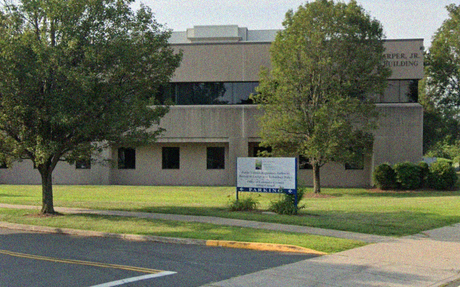
Officials at Connecticut’s Public Utilities Regulatory Authority (PURA) failed to conduct a thorough search and improperly withheld records in another Freedom of Information Act (FOIA) request submitted by one of the state’s utilities, according to a recent ruling from the Freedom of Information Commission (FOIC). The FOIC found PURA improperly withheld interagency communications and legislative proposals under the preliminary drafts exemption and failed to search personal devices in its response to a request submitted by Eversource. PURA was ordered to conduct a more exhaustive search for records, including on personal devices, and to have someone other than Scott Muska, the agency’s former legal director, conduct the search. That order comes after former commissioner Marissa Gillett was fined $2,500 over PURA’s handling of another Eversource request. That request sought documents related to allegations Gillett was unilaterally issuing substantive motion decisions without the involvement of other PURA commissioners. PURA has since admitted to the allegations in a lawsuit settlement.
|
|
|
|
|
|
|
|
|