|
|
1 1 . 2 5 . 2 6
All Access
4 items
We’re taking the next two days off. Wishing the best Thanksgiving has to offer to all of you!
|
|
|

|
State
An internal document that purportedly details controversial actions NextEra Energy took in Florida will not be made public as part of formal hearings over the company’s proposed merger with Dominion Energy. The State Corporation Commission panel of three judges ruled Tuesday to deny a motion to unseal the document. “Due to the potential for specific litigation harm identified by the joint petitioners, we find that it’s appropriate to maintain the confidential status of the Robo Memo,” said SCC Chair Kelsey Bagot. The so-called Robo Memorandum is a document authored by a consulting firm addressed to NextEra’s then-CEO James Robo. It alleges instances of the company interfering in Florida political elections, according to the Miami Herald. But more details are included in the actual document, according to those who have reviewed it.
|
|
|
|
Local
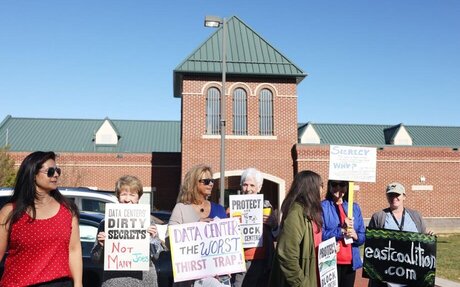
The Botetourt County Board of Supervisors is facing ire from residents and unanswered questions in the aftermath of a judge’s ruling that the county violated the law in the process of approving the contract for the Google data center campus. Board Chair Mac Scothorn opened Tuesday’s meeting — the first since the ruling on Monday — by addressing Circuit Judge Michael Doucette’s decision that the board of supervisors’ vote approving a contract allowing Google to build a data center campus in Daleville violated the Virginia Freedom of Information Act. … “There are still a number of unanswered questions, and we don’t yet have every answer. But what I can tell you from this board — the board is committed to being open with our citizens, and about what comes next,” he said, as meeting attendees audibly laughed at him, “As we learn more, we will share the information publicly and keep you updated on the next steps.” … Scothorn’s comment was the only statement on the ruling from the board Tuesday, but residents who spoke during the citizens comment period and public hearings brought up the ruling as proof of their distrust of county leadership.
|
|
|
|
Local
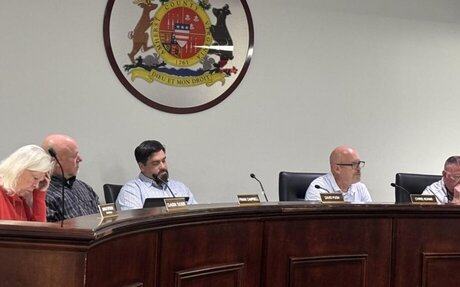
After receiving a request from an organization to cease beginning each meeting with a public prayer, the Amherst County Board of Supervisors is sticking by its invocation practice and will not make any changes. One among the five-member board offers a Christian prayer at the start of each meeting. The Freedom From Religion Foundation, a nonprofit that promotes the constitutional principle of the separation of church and state, recently wrote to county officials about what it called “divisive and constitutionally concerning” prayer practice. … “Board members are free to pray privately or to worship on their own time in their own way. They do not need to worship on taxpayers’ time,” the letter, which was included in the board’s Aug. 4 meeting packet, reads. … Mark Popovich, the county’s attorney, suggested a sheriff’s office chaplain do it or invite local clergy from county religious entities to give the invocation, which he added has worked in other localities he has worked for. … “I don’t care what any other locality does,” Supervisor Claudia Tucker said. “We are a community of prayer. We are a community where our religion is very important. … If you’re here and don’t want to hear it, you have the ability to step out of the room. And maybe when we start our prayer, we can make that clear. I do feel strongly about this.”
|
|
|

|
Higher Ed
In an interim report obtained by The Cavalier Daily, the newly formed Commission for Legitimacy, Electoral Accountability and Reform identified several institutional failures in the University Board of Elections’ oversight of student elections and ballot review process, specifically during the 2026 Student Council presidential election, 2026 College Council presidential election and the 2026 First-Year Council elections. The report — which was released Sunday — examined UBE’s student electoral system and outlined 18 initial findings and recommendations, including concerns that the UBE relies too heavily on unwritten precedent, lacks sufficient mechanisms to enforce its own rules and has not clearly and consistently administered error-free ballots.
|
|
|
|
|
|
|
|
|