|
|
1 0 . 0 2 . 2 6
All Access
6 items
There was no daily newsletter yesterday, Oct. 1.
|
|
|

|
Statewide
Richmond faces scrutiny over Flock contract records // Mold forces temporary closure of Obama Elementary // Court sides with parent in Spotsylvania FOIA delay case // Residents use FOIA to uncover data center projects
|
|
|

|
Local
A former James City County officer faces multiple charges related to computer invasion of privacy and improperly using automatic license plate reader technology following a criminal investigation led by special agents from the Virginia State Police Bureau of Criminal Investigations. Androu A. Eskanda, 30, has been charged with five felony counts of computer invasion of privacy, three misdemeanor counts of computer invasion of privacy, and five misdemeanor counts of improper use of the automated license plate reader system by law enforcement. According to police, Eskandar allegedly used his position as a police officer to improperly access law enforcement information systems for non law‑enforcement purposes related to an internal matter involving coworkers.
|
|
|
|
Local
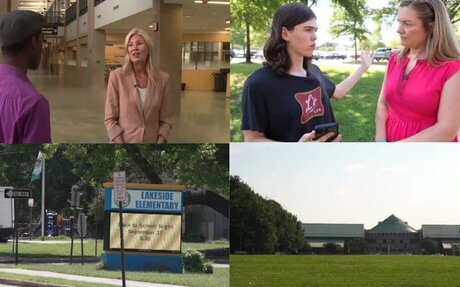
Emails exclusively obtained by CBS 6 through a public records request reveal widespread concerns about air conditioning and high temperatures inside Henrico County Public Schools right before students returned to class and during the first weeks of the school year. The records show HVAC problems were reported at more than 30 schools. … Before the start of the new school year, CBS 6 reporter A.J. Nwoko asked Superintendent Amy Cashwell about the condition of the school division’s HVAC systems. “We are always making sure we’re doing preventative maintenance and keeping those systems up to par,” Cashwell said. … When Nwoko pressed Cashwell on whether families could expect temperature problems during the new school year, HCPS spokeswoman Eileen Cox interrupted the question. “That’s not fair,” Cox said, later adding, “She’s already said that schools are ready to open. Let’s talk about standard start. We’re done with HVAC.” Once school began, however, records show cooling concerns continued to be reported across the district.
|
|
|
|
Local
Suffolk could ask state lawmakers for recurring funding to establish pretrial services, $1 million to help meet federal lead-pipe requirements and relief from the growing cost of a property tax exemption for disabled veterans under a draft 2027 legislative agenda presented to City Council. … The draft also calls for protecting existing Virginia Freedom of Information Act exemptions covering sensitive economic development, public safety, personnel, legal, procurement and negotiating information.
|
|
|
|
Column
In 2025, after twenty-five years at Case Western Reserve University, I moved to William & Mary. Among other things, this meant moving from a private institution to public one. One consequence of moving to a state school has been greater clarity on what speech and expression is covered on campus. … A second consequence of moving to a state school is that my school e-mail and files are potentially subject to freedom-of-information (FOI) requests under state open records laws. And I have been the subject of two such requests since my move to Virginia. Both of the FOI requests submitted to the university had the same focus: communications I may have had with environmental organizations and others involved in climate litigation, presumably in response to the fact that I have have been critical of efforts to derail or preempt lawsuits against fossil fuel companies filed under states law, such asin Suncor Energy v. Boulder County. In neither case, however, are the requesters likely to find anything worthwhile.
|
|
|

|
In other states-California
Gov. Gavin Newsom on Wednesday signed a landmark bill that would give a financial boost to California’s struggling newsrooms. Assembly Bill 2222 will create refundable tax credits for California local news organizations based on the number of journalists they employ. It passed through both houses. It marks an innovative yet controversial attempt to slow the decline of local journalism. The bill, called the Community Newsroom Employment and Workforce Sustainability Act, works by assigning a “job retention credit” of $20,000 per journalist for up to five positions, and after that $15,000 for every additional journalist. Part-time positions will be awarded half-credits. It also stacks an additional $15,000 credit for each new hire to incentivize expanding journalist head counts. The bill — believed to be the largest journalism relief plan in the U.S. to date — comes at a time of steep declines in local news outlets across the country. Many news consumers have turned their attention to social media for critical information, which has, at times, allowed misinformation to spread quickly.
|
|
|
|
|
|
|
|
|