|
|
1 1 . 1 7 . 2 6
All Access
3 items
|
|
|

|
My take
The FOIA Council made a recommendation yesterday that changes a basic definition of FOIA for the first time in the law’s 58-year history. … Such a small change. Such a large impact. Now, three members of some boards can get together to talk about public business without triggering FOIA’s meeting rules. If a board’s quorum is three people, then they would still be restricted to two-by-two meetings, so that means the many 5-person boards of supervisors and city councils would not be impacted. … I’m doubtful, for instance, that when Virginians went to the polls earlier this month to fill new seats of their local governments that they went into the booth thinking, “I hope I get to see less of their work than I do now.”
|
|
|
|
State
Anthropic AI agents filed Freedom of Information Act requests with the Virginia Department of Education, Gov. Abigail Spanberger said in an October announcement directing the creation of a statewide cybersecurity plan to protect the commonwealth from nefarious uses of the technology. … Alyssa Schwenk, a VDOE spokesperson, said the department has experienced “an influx in nonsensical or incomplete communication requests in the last several months, including to our FOIA portal.” She said in September, Anthropic “proactively flagged that three of these requests were from their AI agents. None of these attempts were fulfilled.” Schwenk declined to publicly share the AI-generated requests. … Aaron Martin, an assistant professor of data science at the University of Virginia, said the lack of specificity in both Spanberger’s press release and VDOE’s response makes it difficult to fully understand the incident. “What were the bots after? You know? Like, why on God’s earth would these automated requests be submitting nonsense to the DOE FOIA portal,” he said.
|
|
|
|
Local
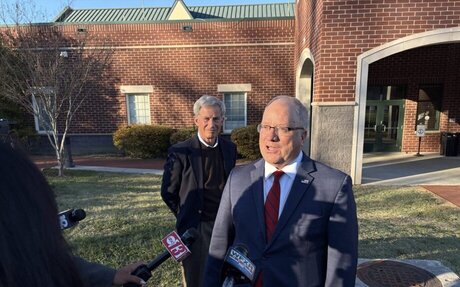
A Botetourt County judge seemed ready on Monday afternoon to rule that the county’s board of supervisors had violated the state Freedom of Information Act on the day it approved an agreement for a Google data center. But at least one argument stopped the judge and delayed his decision, likely until next week. Substitute Circuit Judge Michael Doucette sat for more than five hours as lawyers argued and gathered testimony in a case that retired doctor Robert Dallas filed against Botetourt County, its board of supervisors, its economic development authority and data center developer Helio Capital LLC, an arm of Google. It focused largely on a nearly day-long June 24, 2025, board meeting that included a portion closed to the public and one late recess, during which an unidentified number of observers left the council chambers and a new group, including regional dignitaries, entered. Dallas’ lawyer played a video for the court, showing portions of the meeting. The video showed that after the board’s closed meeting early in the day, the board cast public votes on newly added items that hadn’t been part of the published meeting agenda. One of the new items was a performance agreement that passed unanimously, but no one at that time announced what it was for.
|
|
|
|
|
|
|
|
|