|
|
0 5 . 1 9 . 2 6
All Access
4 items
|
|
|

|
My take
After “strongly” affirming it’s commitment to the public’s right to know, a report by New Hampshire’s Commission on Government Efficiency goes on to criticize the “sheer volume” of Right to Know requests, which has “placed a growing strain on agency resources, consuming months of staff time and delaying responses to the very citizens the law was designed to serve.” This isn’t quite “the law is for you, just don’t use it so much.” There’s an actual culprit, or culprits: “data mining firms, special interest groups, or out-of-state organizations seeking to compile or resell government information.” The proposed reform is fairly mild: allow agencies to prioritize in-state requests over these for-profit requests, such as, I assume, the entire real estate industry. I say “mild” because in 2011, the McDonnell administration’s Government Reform Commission recommended eliminating the Virginia FOIA Council. But the report jumbles it all up — out-of-state with data miners, commercial requests with special interest groups — without giving any specifics. Just four conclusory paragraphs to justify “thoughtful reforms” to ensure that “government remains accessible to all, without compromising its ability to function effectively for the people it serves.” Pro tip: In my two-plus decades tracking the people’s right to know, I think I can say with some authority that the people the government serves would choose accessibility over efficiency every time.
|
|
|
|
State
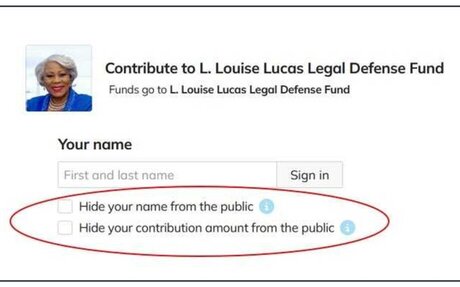
A legal defense fund set up for Sen. Louise Lucas (D-Portsmouth) following an FBI raid of her business office provides contributors with two ways to keep their gifts a secret. Hide your name from the public. Hide your contribution amount from the public. The fund – which had raised $9,700 toward a $100,000 goal by Monday afternoon – is operating in uncharted legal waters in Virginia. … If Lucas were a member of Congress, her fund would be required to disclose the names of all donors, impose contribution limits ($5,000 in the House; $10,000 in the Senate) and bar donations from registered lobbyists.
|
|
|

|
Local
A review of Richmond’s financial data identified almost $5.8 million in duplicate payments, including a $5 million wire transfer that was processed twice. Most of the errors had already been spotted and fixed before the review by the office of City Auditor Riad Ali. However, a little more than $151,000 had not been previously identified, meaning the city will have to take further action to recover the erroneous payments. … To conduct the review, the auditor’s office relied on a version of the city’s payment register, which is a log of all payments to outside vendors. Since 2015, officials have been legally required to publish data from the payment register on the city’s website. However, the city is refusing to do so, saying compliance with the 2015 law creates an undue risk of releasing sensitive information protected under various privacy laws.
|
|
|

|
Local
As she’s able, the recuperating councilmember Debra Hayes can now take part in Marion Town Council meetings. Last week, the council OK’d an ordinance that will allow Hayes, or when needed any council member, to take part in the meetings electronically. The ordinance allows council members with a medical disability that prevents their physical presence or who are caring for a family member with a disability to attend electronically regularly.
|
|
|
|
|
|
|
|
|