|
|
0 8 . 1 2 . 2 6
All Access
3 items
|
|
|
|
Local
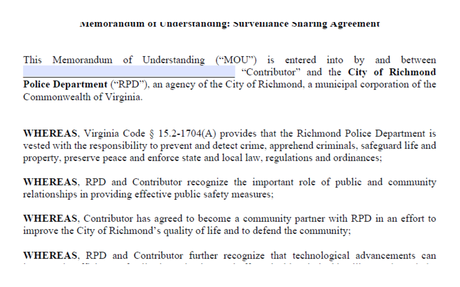
Across Richmond, 30 business owners have agreed to have their security cameras integrated with the police department’s Real Time Crime Center: a 24-hour surveillance hub that relays camera feeds from hundreds of points around the city. Those business owners account for over 550 networked devices — all of which supply police with both recorded footage and live access in one centralized location. But officials won’t say where those cameras are or how many public dollars have been spent installing, integrating and maintaining them. In a months-overdue response to a public records request seeking contracts between Richmond police and business owners, the department declined to release responsive documents, citing language in state law that shields “information (that) would reveal surveillance techniques” from public disclosure. It’s not the first time officials have chosen to obscure those techniques. The Times-Dispatch previously reported that police had declined to disclose queries and audit logs from the city’s 99 Flock cameras: automatic license plate readers that track vehicle movements across the city.
|
|
|

|
Local
Amherst County’s attorney addressed the practice of prayer at the beginning of each county board of supervisors meeting and said in his opinion the board-invoked prayers are “completely acceptable” based on case law and how they go about it. … Patrick O’Reiley, a legal fellow of Freedom From Religion Foundation, wrote to the board and requested that it respect the rights of all meeting attendees by ceasing the prayer practice. “Prayer at government meetings is unnecessary, inappropriate, and divisive,” the letter, which was included in the board’s Aug. 4 meeting packet, reads. “Board members are free to pray privately or to worship on their own time in their own way. They do not need to worship on taxpayers’ time. … Mark Popovich, the county’s attorney, addressed the board in response to the letter at its Aug. 4 meeting. He said a lot of case law supports localities in how they initiate “legislative prayer.” Popovich said he has regularly observed the board’s practice and how “there’s no script, there’s no requirement,” and the manner in which it is done, in his legal opinion, is completely acceptable.
|
|
|

|
Federal
I file a lot of Freedom of Information Act requests. I’ve been requesting staff lists from both Trump administrations, and I have tracked thousands of federal political appointees in order to publish financial disclosures in searchable databases. Much of that data was sourced from the Office of Personnel Management, which maintains a trove of information about who works in the federal government. But that agency’s FOIA department was thrown into chaos as Elon Musk’s Department of Government Efficiency fanned out across federal agencies to cut employees in early 2025. Getting records from the agency has since become an increasingly Kafkaesque process, one that in early July of this year bounced me between three different seemingly abandoned email inboxes and two web portals. Aside from the fact that my once-routine requests now languish for months, just asking for documents has become its own kind of shell game.
|
|
|
|
|
|
|
|
|