|
|
0 1 . 1 6 . 2 6
All Access
5 items
Follow the bills we follow. VCOG’s annual bill chart is up and running
and will be updated daily throughout the legislative session.
Click here
|
|
|

|
Local
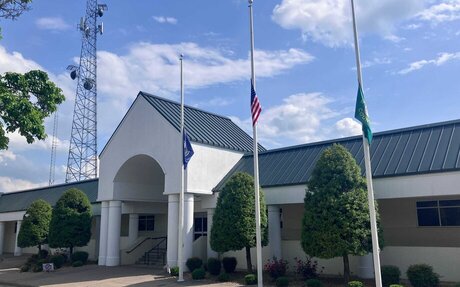
Opponents of a proposed Google data center in Botetourt County filled the Western Virginia Water Authority’s board room on Thursday to push back against the project and demand transparency. Tens of people attended the water authority’s monthly board meeting to show their resistance, with many involved with the Southwest Virginia Data Center Transparency Alliance, a grassroots organization that formed in response to planned project. … A judge ordered the water authority to release records showing the data center’s expected water usage that same month, after The Roanoke Rambler sued the water authority for redacting that information from documents it released under the Virginia Freedom of Information Act. In an interview after the meeting, McEvoy said the water authority disagreed with the ruling. It is seeking an emergency stay from the Virginia Court of Appeals that would stop the ruling from taking effect. “It’s about 20 words out of a 90-something-page document that’s been redacted,” McEvoy said. “But [the judge] indicated that for the reasons she said before that she thought it should be unredacted. We’re waiting to hear what the appeals court says.” For Sean Koppel, a member of the alliance, the appeal was a sign of the water authority’s priorities.
|
|
|
|
Local
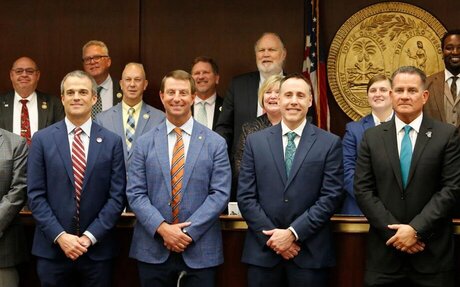
The Augusta County Board of Supervisors relitigated the case of Augusta County Sheriff’s Office Sgt. William Mikolay during a discussion about minutes on Jan. 14. In November, the board agreed to reimburse more than $50,000 in legal fees for two sheriff’s deputies with dismissed charges, with Sgt. William Mikolay receiving $25,000 and Inv. C.J. Taylor receiving $29,128.67. Both were involved in separate incidents. Discussion about the reimbursements began during the November meeting, and Supervisor Scott Seaton felt the minutes from that meeting did not reflect his position on the reimbursements. “I think it’s very abbreviated and doesn’t adequately describe what went on,” said Seaton.
|
|
|
|
In other states-South Carolina
South Carolina legislators are set to pass an amendment specifying revenue-sharing contracts between universities and their athletes are not a public record. The move is meant to head off a lawsuit from a Mount Pleasant businessman and Freedom of Information Act (FOIA) advocate against the University of South Carolina, seeking copies of name-redacted contracts between the university and its football players. The state’s name, image, and likeness (NIL) law specifically says schools do not need to disclose athletes’ contracts in response to an open records request “unless they” — the university — “are a party” to the deal. The amendment, which representatives voted in favor of 111-2 on a second reading, deletes the phrase “unless they are a party” and makes it so all NIL deals are private, regardless of the university’s role.
|
|
|
|
Federal
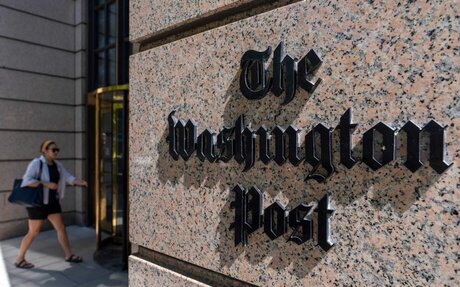
FBI agents searched a Washington Post reporter’s Alexandria home yesterday (Wednesday) as part of a leak investigation into a Pentagon contractor accused of taking home classified information, the Justice Department said. Hannah Natanson, who has been covering President Donald Trump’s transformation of the federal government, had a phone, two laptops and a Garmin watch seized in the search of her Alexandria home, the Post reported. Natanson has reported extensively on the federal workforce and recently published a piece describing how she gained hundreds of new sources — leading one colleague to call her “the federal government whisperer.” … While classified documents investigations aren’t unusual, the search of a reporter’s home marks an escalation in the government’s efforts to crack down on leaks. The Post was told that Natanson and the newspaper are not targets of the probe, executive editor Matt Murray said in an email to colleagues. “Nonetheless, this extraordinary, aggressive action is deeply concerning and raises profound questions and concern around the constitutional protections for our work,” Murray wrote. “The Washington Post has a long history of zealous support for robust press freedoms. The entire institution stands by those freedoms and our work.”
|
|
|
|
Editorial
We stand in solidarity with several journalism groups that have called out the government’s actions. Here are just a few of their statements, and we hope that you agree that a grave injustice has been done: … “Let’s be clear: Congress has already spoken on this issue. The Privacy Protection Act of 1980, passed by Congress in the wake of earlier abuses, was designed specifically to sharply limit law enforcement searches of journalists’ homes or seizures of their work product, permitting them only under narrowly defined and extraordinary circumstances. The law exists to protect the public’s right to know — not to shield the government from embarrassment or scrutiny. The search of a reporter’s home, the seizure of her communications devices and the implicit message sent to her sources directly undermine the intent of that law.”
|
|
|
|
|
|
VCOG’s annual FOI awards nomination form is open.
Nominate your FOIA hero!
“Democracies die behind closed doors.” ~ U.S. District Judge Damon Keith, 2002
Follow us on: X / Facebook / Instagram / Threads / Bluesky
|
|
|
|