|
|
1 2 . 1 5 . 2 5
All Access
4 items
|
|
|
|
Local
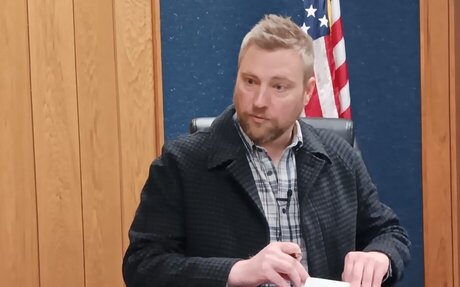
Martinsville City Council member Aaron Rawls said he will release details about the firing of former Martinsville City Manager Aretha Ferrell-Benavides and a related investigation by city attorneys as early as next month. In a Thursday afternoon press conference, Rawls said recent media coverage, including Cardinal News’ publication of an almost entirely redacted report about the investigation, has contributed to rumors and confusion. He said he plans to release investigation details sometime in late January or early February. In August, a split council declined to make the report public, citing attorney-client privilege. While Rawls voted to release it, he has declined Cardinal News’ requests to provide a less-redacted version of the report, which was prepared by the law firm Sands Anderson, acting as the city’s attorney. Rawls said in a phone call Thursday evening with Cardinal News that he plans to release much of the information contained within the report, but not the report itself.
|
|
|

|
Local
A legal challenge filed this month in Shenandoah County Circuit Court seeks to overturn the election of incoming Shenandoah County School Board member L.M. “Mike” Scheibe II, arguing he was not legally eligible to run because of a 2004 felony conviction in Pennsylvania. Court records show Scheibe pleaded guilty and was sentenced to 8 months and 15 days to 23 months confinement, followed by probation that was completed in 2011. Wilson’s lawsuit alleges that Scheibe incorrectly answered “no” on his certificate of candidate qualification when asked whether he had ever been convicted of a felony that would preclude him from holding office. The form includes a warning that knowingly making a false statement constitutes a felony under Virginia election law. Whether the 2004 conviction legally precludes Scheibe from holding office is the central question now before the court. Scheibe has said that at the time he completed the form he believed the 2004 conviction was no longer subject to public disclosure. On Nov. 4, WMRA reported that Scheibe said the conviction had been expunged. Scheibe is now declining to comment further on the legal status of the record on advice of legal counsel.
|
|
|

|
In other states-Michigan
The Michigan Court of Appeals has sided with Grand Rapids in a lawsuit over the city’s response times to a public records request. The American Civil Liberties Union (ACLU) sued Grand Rapids over a Freedom of Information Act (FOIA) request that the city took over a year to fulfill. The ACLU argued that by taking so long to provide the public records, the city was essentially denying the FOIA request. However, the state appeals court ruled the city did not violate FOIA law because it did ultimately provide the documents. State law does not mandate a timeframe in which a public body must disclose the records, according to the order handed down Thursday, Dec. 11 by a three-judge panel that included Michael Kelly, James Robert Redford and Kathleen Feeney.
|
|
|

|
Opinion
In the last two decades, the Local News Initiative of the Medill School of Journalism’s researchers report, nearly 40 percent of American newspapers have gone out of business, most of them in small towns, but a few in big cities where newspaper competition once thrived. More than 210 counties don’t have a newspaper at all; in 1,525 counties there is just one paper, nearly always a weekly. The Local News Initiative estimates that as many as 50 million Americans have “limited or no access to a reliable source of local news.” I trust the figures from Medill, and I share the conviction that American journalism has a serious problem on its hands, especially in rural and small-town America. But rather than just mourning the losses, I want to step back and ponder just what sort of product we have lost, and what newer forms of expression are coming to replace it. THE BIG-CITY DAILIES were reasonably healthy and profitable in the postwar years — at least the morning ones were. When it came to local government, they produced reasonable stories about what had happened the day before. But there was little perspective on what it all meant, and, most important, it didn’t tell you much of anything about the relationships among the players. It’s the relationships that most often explain politics.
|
|
|
|
|
|
VCOG’s annual FOI awards nomination form is open.
Nominate your FOIA hero!
“Democracies die behind closed doors.” ~ U.S. District Judge Damon Keith, 2002
Follow us on: X / Facebook / Instagram / Threads / Bluesky
|
|
|
|